No — not entirely, and not forever in their current form. Free tiers exist to get you hooked and to gather data on how people use the product.
Expect basic chat and search-style help to stay free longest, while extras like longer memory, faster speed, and higher usage caps shift behind a paywall. Stay flexible and don’t build your whole workflow around one tool, and you’ll barely notice when pricing changes.
Why this comes up
You’ve probably felt this before with other apps — free at first, then suddenly a paywall for the feature you actually need.
It’s a fair worry: nobody wants to build a habit around a tool that quietly starts charging for the parts that made it useful.
The honest answer
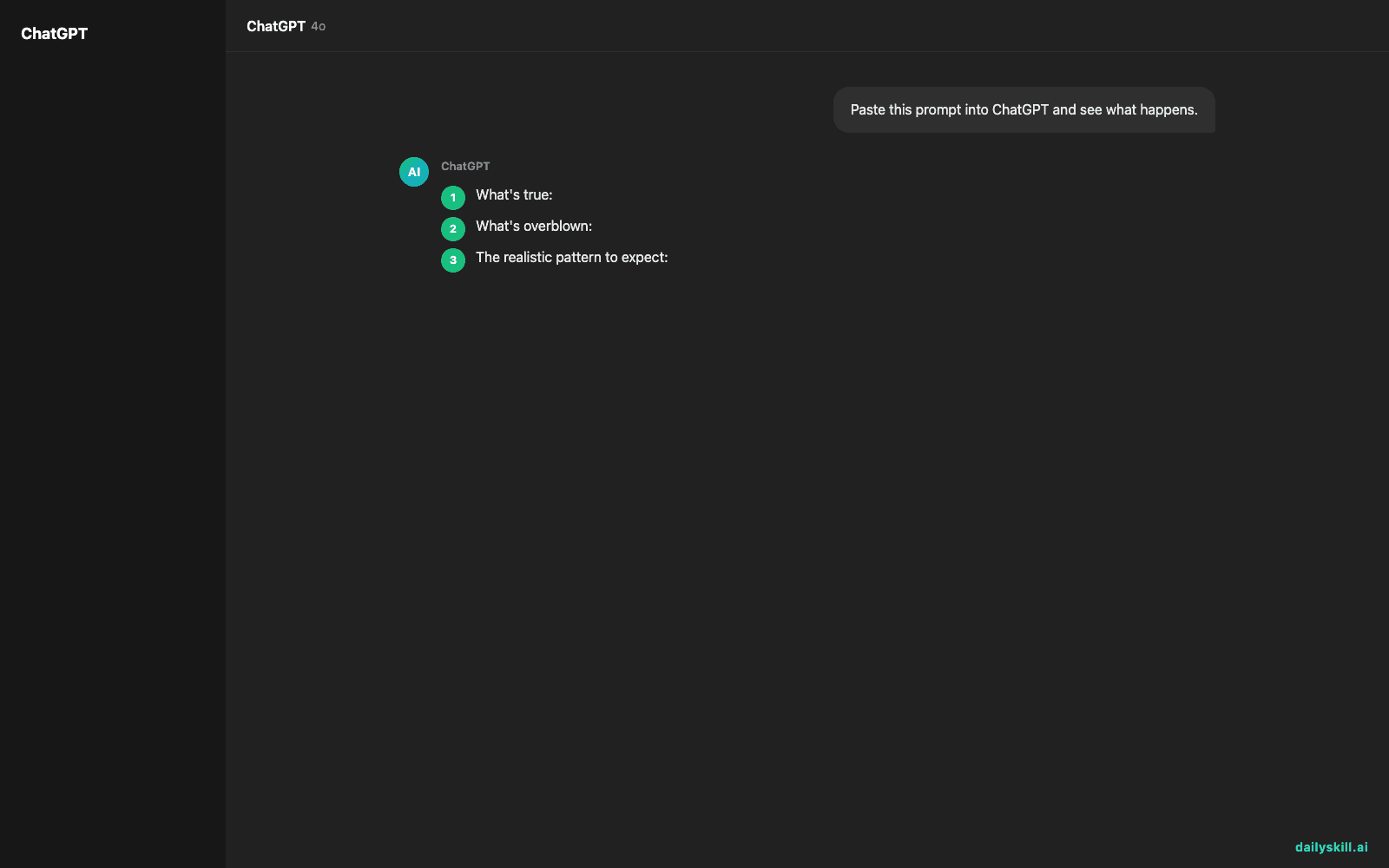
What’s true:
– AI companies spend huge amounts on computing power. That cost has to come from somewhere — subscriptions, ads, or your data.
– Free tiers today are genuinely more capable than free tiers a year or two ago. Live web search, up-to-date answers, and faster responses are now common even on free plans — that’s competition working in your favor.
– Free access is a growth strategy, not charity. The goal is to get you comfortable, then upsell you to paid tiers with more speed, memory, or advanced features.
What’s overblown:
– The fear that “free AI is disappearing tomorrow.” Competition between tools is fierce right now, which keeps free tiers alive — and improving — longer than you’d expect.
– The idea that paid always beats free. For everyday tasks — writing an email, brainstorming, answering questions, even quick research — free tiers are still plenty.
Free AI isn’t a guarantee. It’s a strategy. Use it, but don’t depend on it.
The realistic pattern to expect:
– Basic chat and search-style help: likely to stay free longest, because it drives adoption.
– Heavy or specialized use (large documents, image/video generation, coding at scale): more likely to require payment.
– Usage caps: free tiers often quietly tighten limits (fewer messages per day, slower response times) instead of disappearing outright.
What to do
- Don’t build critical work around one free tool. If you use AI for anything important, know a backup option.
- Export your work. Save chat histories, documents, or project notes outside the AI tool itself.
- Watch for usage limits, not just price tags. A tool going from “unlimited” to “20 messages a day” is a quiet form of paywalling.
- Try more than one tool. Rotating between a couple of free options keeps you from feeling stuck if one changes terms.
- Budget a small amount for a paid tier if AI is saving you real time. Even a cheap plan can be worth it if it’s replacing hours of work.
FAQ
Will ChatGPT, Gemini, and Claude all stay free forever?
Some free access will likely remain, since competition pushes companies to keep a usable free tier. But expect the free version to stay more basic than the paid one over time.
Is it risky to rely on free AI for work tasks?
Not risky exactly, but plan for change. Keep your own copies of important outputs so a pricing shift never costs you your actual work.
Are paid AI plans worth it?
If AI is saving you meaningful time every week, a low-cost paid plan often pays for itself. If you use it occasionally, free is usually enough.
Bottom line
Free AI will likely stick around in some form — just don’t expect it to stay as generous as it is today.
What’s your experience — has a free AI tool ever changed on you? Share it with the community.
Tomorrow: Why did my favorite AI tool suddenly switch to a different model?
You might also find these helpful:
- Perplexity AI — Get Answers With Sources, Not a Pile of Links
- How do I know if an AI answer is actually true?
- You.com — A Free AI Search Engine That Skips the 10 Blue Links
Master Everyday AI in 1 Minute a Day
Get our free 2026 Double-Blind AI Benchmark Scorecard & 20 Ready-to-Use Prompts, plus one honest, 60-second AI skill in your inbox every morning. Zero hype, plain English, cancel anytime.