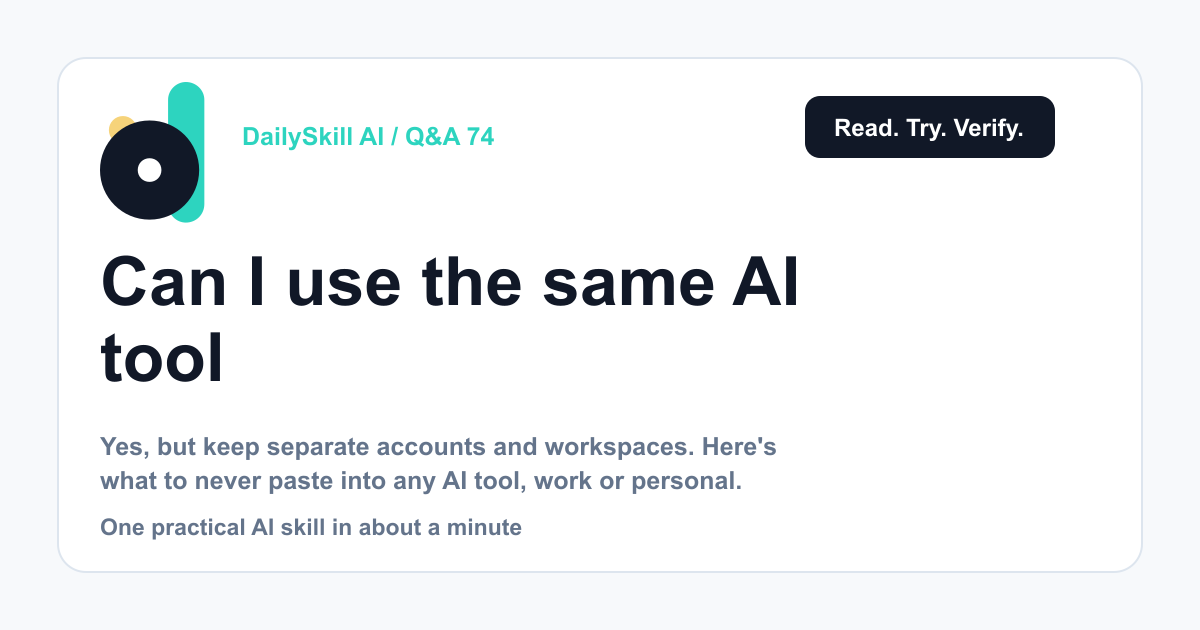
Yes, you can use the same AI tool — like ChatGPT, Gemini, or Claude — for both work and personal use. But you shouldn’t use the same account for both. Keep a personal account for personal stuff and a separate work account for work stuff. The tool can be identical. The account, and what you type into it, should not mix.
Why this comes up
You already trust one AI assistant and don’t want to juggle five apps. But you’ve also heard “don’t paste sensitive data into AI” and aren’t sure where the line is.
Is asking it to fix your resume the same risk as pasting a client contract? It’s not — the risk isn’t the tool itself. It’s what data ends up where, and who can see it later.
The honest answer
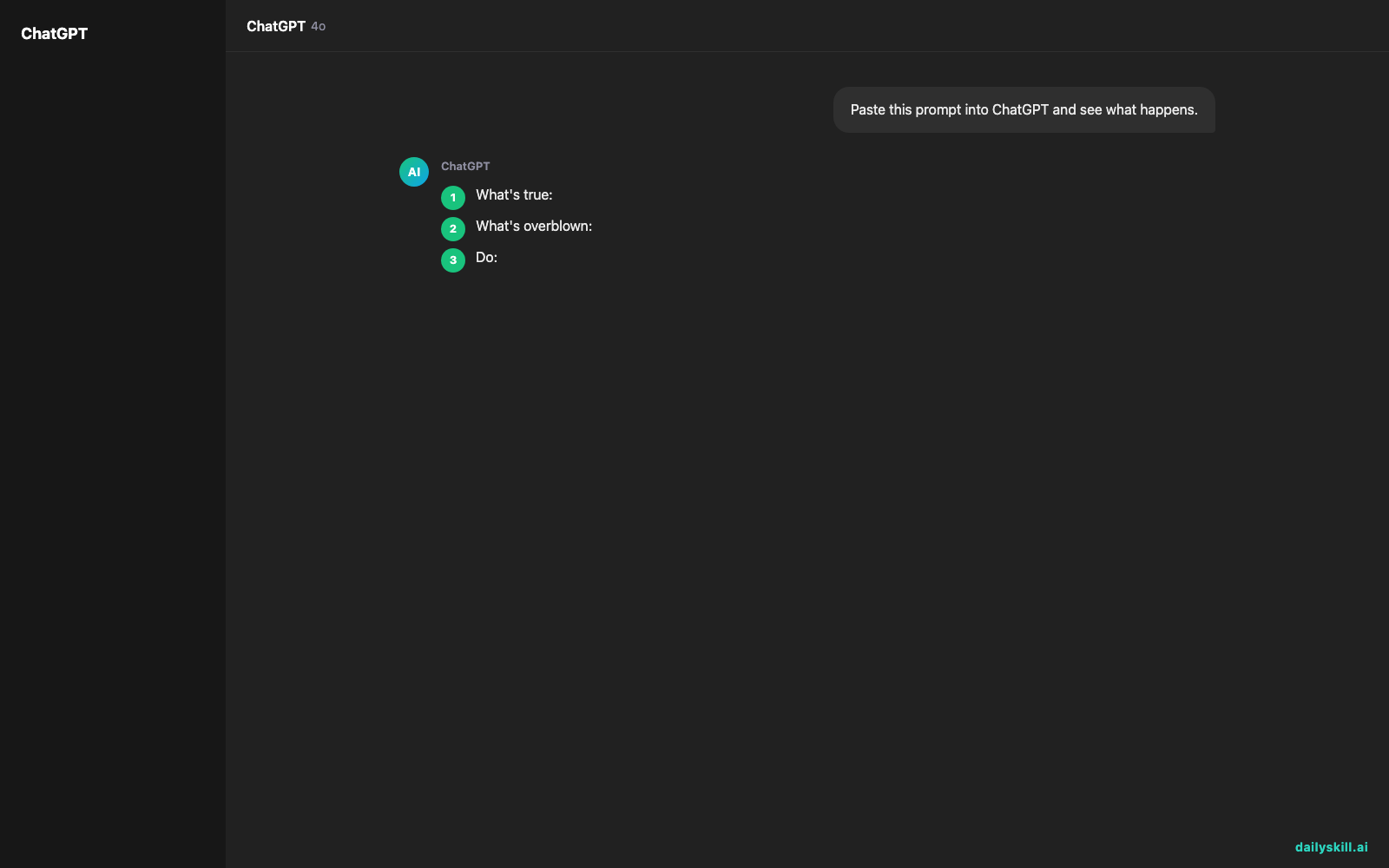
What’s true:
– Work accounts (like ChatGPT Team/Enterprise, Gemini for Workspace, or Claude for Work) usually have different privacy settings than free personal accounts. Your company controls data retention, and prompts typically aren’t used to train models.
– Your personal account is governed by consumer terms, which can differ — it’s worth a quick check in settings to see what’s used for training and what isn’t.
– If your job provides a specific AI tool, that’s usually the safer default for work tasks, because IT has already reviewed it.
What’s overblown:
– You don’t need to worry that “the AI is spying on you.” Mainstream tools now give you real privacy controls, and you can usually turn off chat history or model training in settings.
– Using AI for work isn’t reckless — it’s normal in most workplaces now. The issue is what you feed it, not that you use it.
The tool doesn’t need to know your job title and your therapist’s name in the same conversation thread.
What to do
Do:
– Use a separate account for work (your company email) and personal use (your own email).
– Ask your employer if there’s an approved AI tool or plan — use that one for anything work-related.
– Check your settings and turn off chat history or model training if you’re unsure who sees what.
– Start a new chat for a new topic. Don’t let work and personal conversations blend in one long thread.
Don’t:
– Don’t paste passwords, API keys, or login credentials into any AI chat, ever.
– Don’t paste patient data, client financials, HR records, or anyone else’s personal info.
– Don’t paste confidential work documents into your personal account “just this once.”
– Don’t assume deleting a chat erases it everywhere instantly. Treat anything you type as semi-permanent.
FAQ
Is it bad to ask my personal ChatGPT for help writing a work email?
Low-risk if there’s no sensitive info in it — a generic email draft is fine. Skip it if the email includes client details, salary numbers, or anything confidential.
Can my company see what I type into a work AI account?
Often yes, similar to work email or Slack. Assume work accounts are logged and reviewed, same as any other work tool.
What if my job doesn’t provide an AI tool at all?
Ask before assuming it’s fine to use your personal account for work tasks. Some companies have rules about this even without providing their own tool.
Bottom line
Same tool, different accounts, different boundaries — that’s the whole trick.
What’s your rule of thumb for keeping work and personal AI use separate? Tell us in the comments.
Tomorrow: How do you ask AI to explain something in simpler words — without it getting condescending or vague?
You might also like:
- Compare Prices Across 3 Products Without Opening a Single Spreadsheet
- Cal.ai — Stop Playing Email Tag to Book a Meeting
Master Everyday AI in 1 Minute a Day
Get our free 2026 Double-Blind AI Benchmark Scorecard & 20 Ready-to-Use Prompts, plus one honest, 60-second AI skill in your inbox every morning. Zero hype, plain English, cancel anytime.