
You’ve rewritten the same text 11 times, deleted it twice, and it still sounds like a corporate press release. Here’s the fix: describe what happened to ChatGPT, and in under a minute you get three ready-to-send apologies — casual, warm, and formal — that actually sound like you, not a customer service script.
Sound familiar?
You know you messed up. Maybe you forgot your friend’s birthday, snapped at your partner, or missed a work deadline without a heads-up.
Every draft comes out too stiff (“I sincerely apologize for any inconvenience”) or too defensive (“I’m sorry, but you have to understand…”). So the message sits unsent, and the awkwardness just grows.
The 60-second fix
1. Open ChatGPT and describe the situation honestly
Don’t sugarcoat it or over-explain. Just say what happened, who it affected, and what you want to happen next.
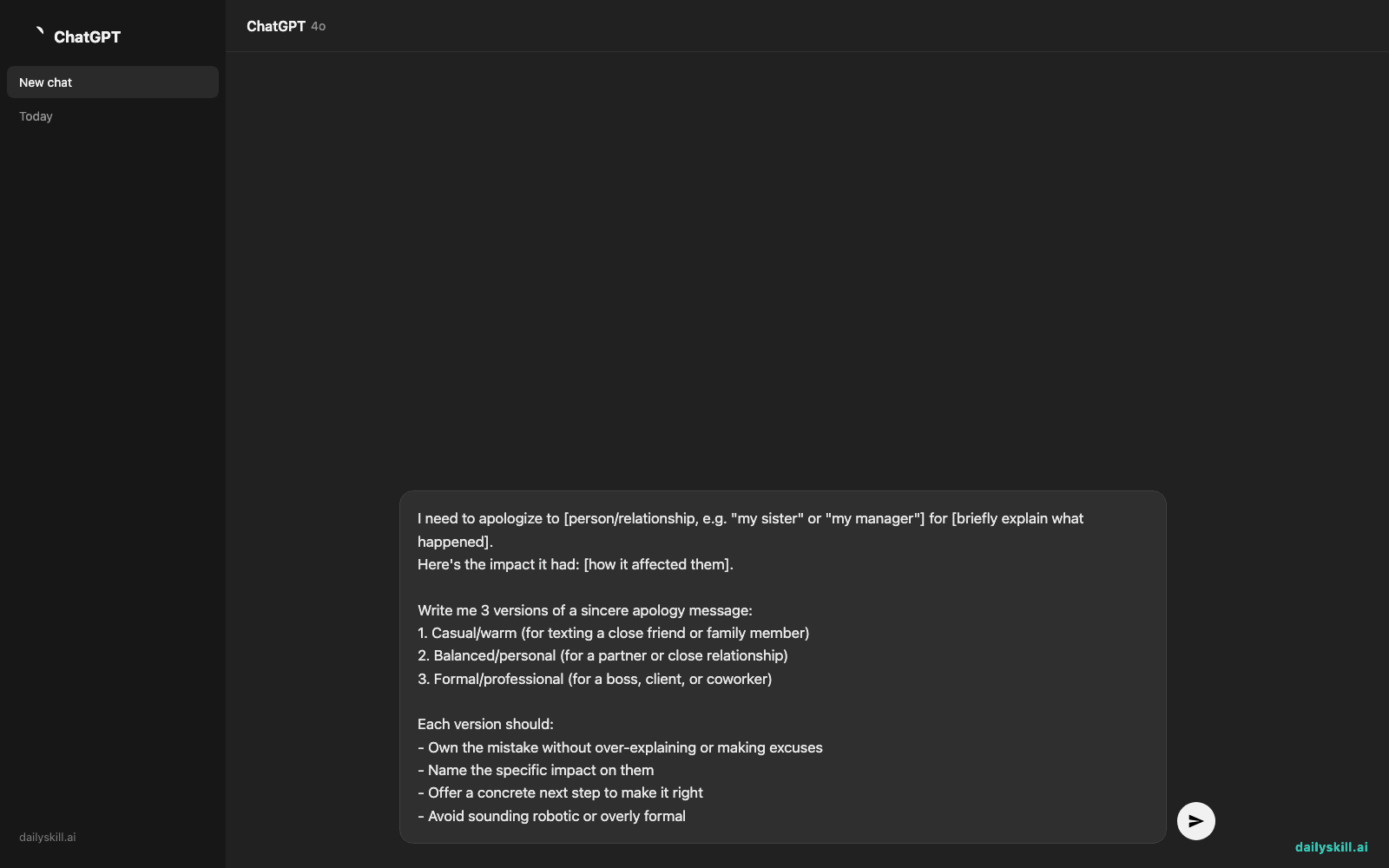
2. Paste this prompt
I need to apologize to [person/relationship, e.g. "my sister" or "my manager"] for [briefly explain what happened].
Here's the impact it had: [how it affected them].

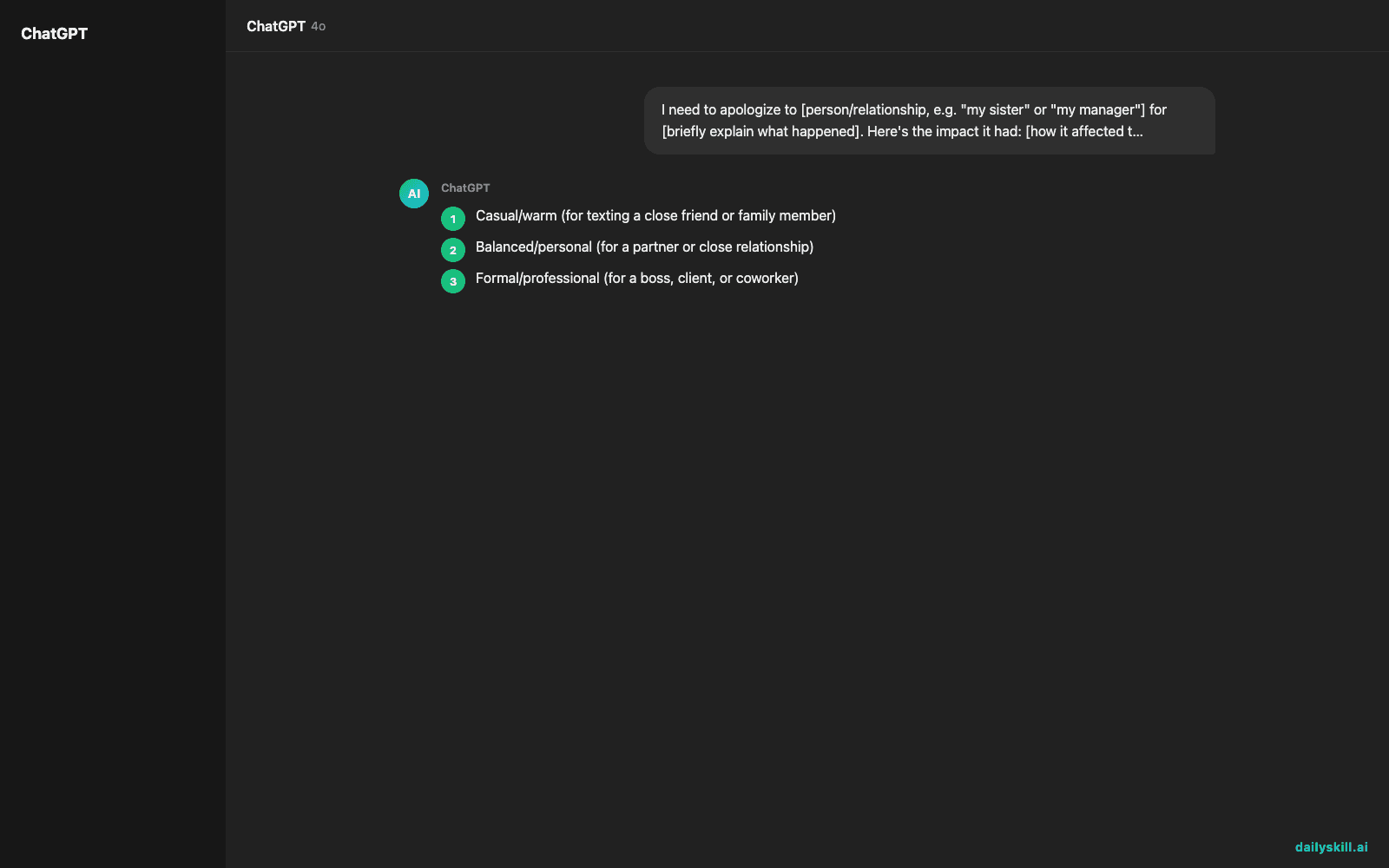
Write me 3 versions of a sincere apology message:
1. Casual/warm (for texting a close friend or family member)
2. Balanced/personal (for a partner or close relationship)
3. Formal/professional (for a boss, client, or coworker)

Each version should:
- Own the mistake without over-explaining or making excuses
- Name the specific impact on them
- Offer a concrete next step to make it right
- Avoid sounding robotic or overly formal
3. Pick the version that fits, tweak one line to sound like you, and send it
Add a specific detail only you would know (an inside joke, a project name). It instantly makes the message feel real instead of copy-pasted.
Real example
Input: “I need to apologize to my friend Priya for missing her birthday dinner last Saturday — I double-booked with a work happy hour and didn’t tell her until the next day. She’s been replying to my texts with one word since. I want to apologize.”
AI output (casual version):
“Priya, I’ve been feeling bad all week about missing your birthday dinner. I double-booked with a work thing and didn’t even give you a heads-up until the next day — that’s on me, and I know it made your birthday feel smaller than it should’ve. I’m sorry, truly. Can I take you to dinner this weekend, just us, my treat? No excuses this time.”
That’s it — specific, owns the mistake, offers a real fix. No “sorry if I upset you” hedging.
Level up
- Add tone control: say “make it shorter” or “less dramatic, more matter-of-fact” and regenerate instantly.
- For repeated conflicts: ask “what pattern might be causing this apology to feel necessary again?” — useful when the same issue keeps coming up.
- For work emails: add “keep this under 80 words and don’t mention blame on either side” for a clean, professional apology.
FAQ
What makes an apology actually work instead of just sounding good?
It names the specific impact on the other person (not just “I’m sorry”) and includes one concrete next step — not just words.
Can AI write an apology that doesn’t sound fake or robotic?
Yes, if you give it real details instead of vague ones. The more specific your input, the less generic the output feels.
Is it okay to send an AI-written apology?
Yes — think of it as a template you personalize. Add one detail only you’d know, and it becomes genuinely yours.
Today’s check-in
Try it on one apology you’ve been avoiding, then tell the community which version you sent. Tomorrow: turn your messy, scattered research notes into a clean blog post skeleton — in one prompt.
You might also like:
- How do I use AI to fix grammar and spelling in my writing?
- Loom — Stop Typing “Let Me Explain” and Just Record It
Master Everyday AI in 1 Minute a Day
Get our free 2026 Double-Blind AI Benchmark Scorecard & 20 Ready-to-Use Prompts, plus one honest, 60-second AI skill in your inbox every morning. Zero hype, plain English, cancel anytime.