Someone asks “so, are you actually getting better at that?” — and you just shrug, because you have no idea how to prove it.
Here’s the fix: describe a habit or skill you’re working on, and Claude will turn it into a clear before/after checklist in about 60 seconds — real proof instead of a gut feeling.
Sound familiar?
You’ve been working on something for weeks — public speaking, cooking, patience with your kids, running, whatever. You know you’ve put in effort.
But when someone asks if it’s working, you just kind of shrug. There’s no snapshot, nothing to compare against. Progress feels invisible even when it’s real.
The 60-second fix
1. Pick one habit or skill you’re improving
Something specific, not vague. “Getting healthier” is too broad. “Cooking dinner without a recipe” or “staying calm during work meetings” is perfect.
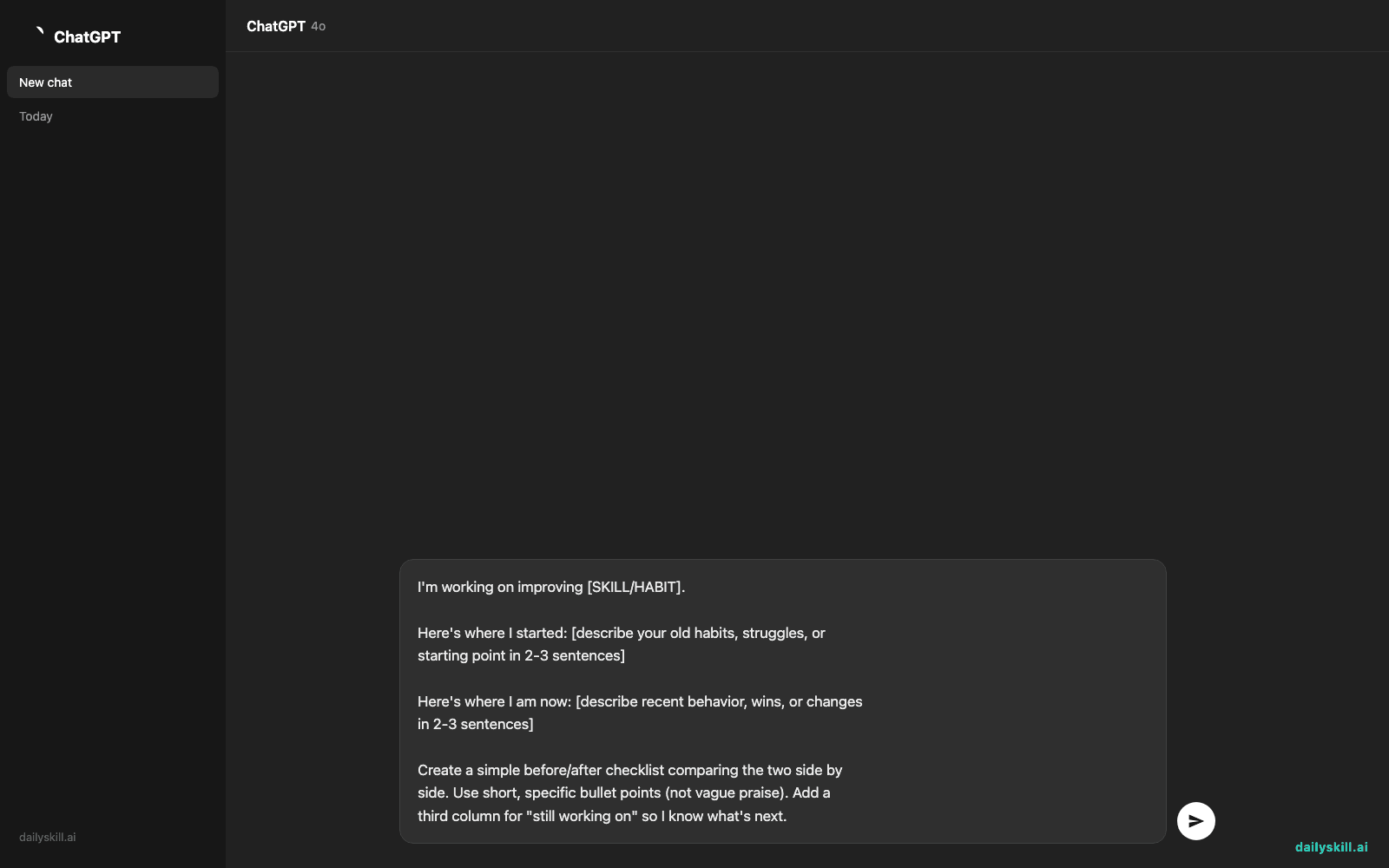
2. Copy this prompt into Claude
Fill in your own details where marked.
I'm working on improving [SKILL/HABIT].

Here's where I started: [describe your old habits, struggles, or
starting point in 2-3 sentences]

Here's where I am now: [describe recent behavior, wins, or changes
in 2-3 sentences]

Create a simple before/after checklist comparing the two side by
side. Use short, specific bullet points (not vague praise). Add a
third column for "still working on" so I know what's next.
3. Save it somewhere you’ll actually see it again
Notes app, sticky note, wherever. Revisit it monthly and update the “after” column — that’s your habit progress tracker from here on out.
The point isn’t a perfect document. It’s having proof you can point to instead of a feeling you can’t quite trust.
Real example
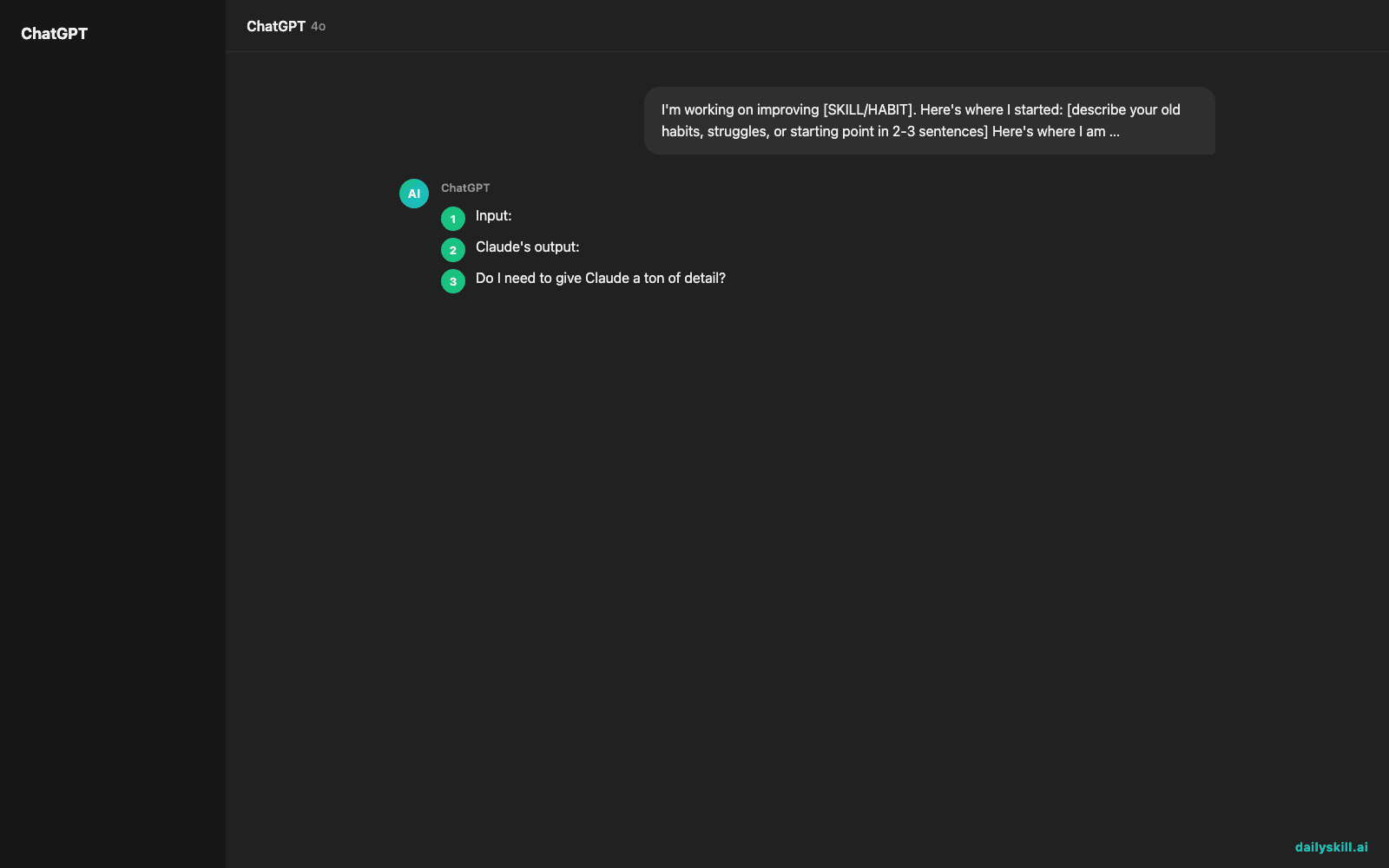
Input: “I’m working on public speaking. Before: I read straight off notes, avoided eye contact, talked fast when nervous. Now: I use bullet points instead of full sentences, I pause instead of rushing, I still get shaky hands sometimes.”
Claude’s output:
| Before | After | Still Working On |
|---|---|---|
| Read word-for-word from notes | Speak from bullet points | Fully memorizing key sections |
| Avoided eye contact with audience | Make eye contact in short bursts | Holding eye contact longer |
| Rushed through nervous moments | Pause instead of speeding up | Shaky hands under pressure |
That’s a real improvement checklist AI can generate in under a minute — and it’s way more convincing than “I feel like I’m better at this.”
Level up
- Turn it into a recurring check-in: ask Claude to add a “next month’s goal” column so your personal growth tracker updates itself over time.
- Use it for teams too: describe a work process before/after (e.g., “how we handled customer complaints”) to spot real improvements, not just assumptions.
- Make it visual: ask for a simple before/after comparison template with checkboxes you can tick off as you hit each milestone.
FAQ
Do I need to give Claude a ton of detail?
No — two or three honest sentences per side is enough. Specific beats long every time.
Can I use this for something like weight loss or fitness?
Yes, but keep it about behaviors and habits (meal prep, workout consistency) rather than just numbers — it gives you a fuller picture of progress.
What if I don’t have a clear “after” yet?
Still do it. List your current struggles as “before,” leave “after” blank, and fill it in as you improve — instant progress tracking checklist ready to go.
Today’s check-in
Try it and share one line from your before/after checklist in the comments — we’d love to see your progress. Tomorrow: turn your event photos into a written recap with AI, so your best memories don’t just sit in your camera roll.
You might also like:
- How do I use AI to improve my resume or cover letter?
- Soundraw — Stop Digging Through Copyright-Free Music Sites
Master Everyday AI in 1 Minute a Day
Get our free 2026 Double-Blind AI Benchmark Scorecard & 20 Ready-to-Use Prompts, plus one honest, 60-second AI skill in your inbox every morning. Zero hype, plain English, cancel anytime.