Yes. AI is genuinely one of the best interview-prep tools you have right now: practice real interview questions with an AI chatbot, get honest feedback on your answers, and sharpen your stories before you’re in front of a real interviewer. It won’t replace practicing out loud or researching the company — but as a rehearsal partner available at 11pm the night before, it’s hard to beat.
Why this comes up
Most people freeze in interviews not because they lack the experience, but because they’ve never said their answer out loud before. You did good work — you just haven’t practiced turning it into a tight, confident story.
There’s also a quieter worry: “Is it cheating to use AI to prep?” It’s not. Rehearsing with AI is no different from practicing with a friend or a career coach. The words and the experience are still yours.
The honest answer
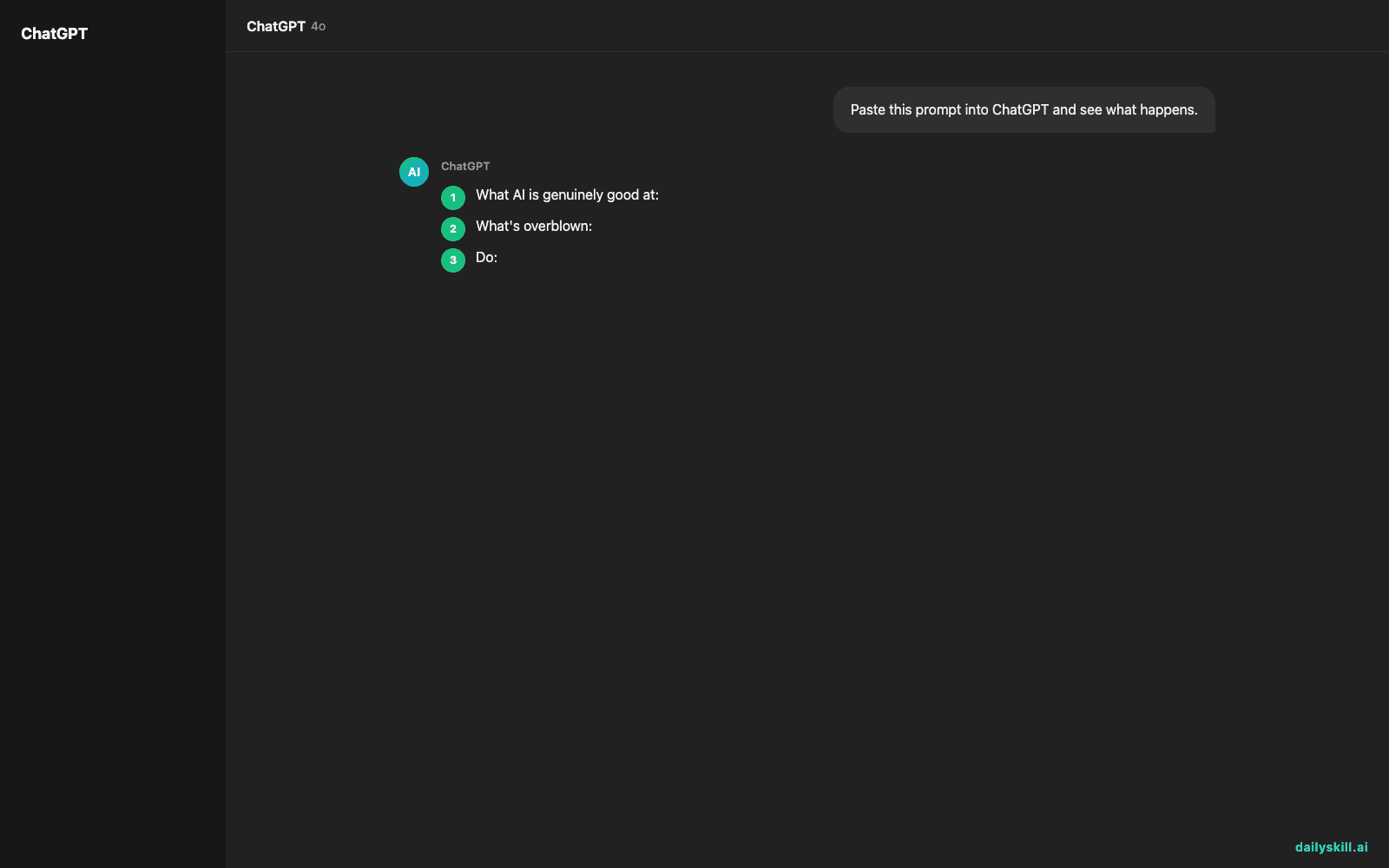
What AI is genuinely good at:
- Generating realistic mock interview questions. Give it the job title, company, or job posting, and it produces a mix of behavioral, technical, and “tell me about yourself” questions close to what you’ll actually face.
- Acting as a practice interviewer. Ask it to interview you one question at a time, like a real conversation, instead of dumping a list of 20 questions at once.
- Giving structured feedback. Paste in your answer to “Tell me about a time you dealt with conflict,” and ask it to check your structure (like STAR: Situation, Task, Action, Result), whether you’re too vague, or whether you’re burying the good part.
- Trimming rambling answers. A common problem is answers that run three minutes long. AI is good at spotting where you lost the thread and suggesting a tighter version.
What’s overblown:
- AI can’t read the room, your tone, or your body language. Interview performance is mostly delivery, and that only improves by practicing out loud — ideally recorded.
- It doesn’t know your target company’s actual interview culture as well as someone who’s worked there. Treat its guesses about “what they’ll ask” as a starting point, not gospel.
- It can’t tell you whether you’re a good fit for the role — only whether your answer is clear and complete.
The AI can sharpen how you tell your story. It can’t live your story for you — so don’t let it write answers you couldn’t actually speak from memory.
What to do
Do:
– Generate a mock interview questions list tailored to the specific job posting, not generic questions.
– Ask for a live back-and-forth: “Interview me for this role, one question at a time, and give me feedback after each answer.”
– Answer out loud, then type or transcribe it — reading silently doesn’t build the muscle memory you need.
– Ask specifically: “Is this answer too long? What’s missing? Would a hiring manager understand the impact?”
– Bring your real stories, messy first drafts included. Let the AI structure and tighten them, not invent them.
– Practice your weakest question type 3-4 times until it feels natural, not memorized.
Don’t:
– Don’t memorize an AI-written script word-for-word — it sounds stiff and falls apart on an unexpected follow-up.
– Don’t skip researching the company. Ask the AI to help you draft good questions to ask them, too.
– Don’t use AI during the actual interview to generate live answers. Most employers consider that dishonest, and it’s a risk not worth taking.
– Don’t treat one practice round as enough. Interview confidence comes from repetition.
FAQ
Which AI should I use to practice a mock interview?
Any general AI chatbot works well as a practice interviewer — just tell it the role and ask it to run the interview. The tool matters far less than actually doing the practice.
Can AI help with technical or coding interviews too?
Yes — it can generate practice problems, walk through solutions with you, and explain concepts you’re shaky on. For live coding rounds, still practice on a whiteboard or plain editor, since that’s closer to real conditions.
How many times should I practice before the real interview?
Enough that your answers feel familiar but not rehearsed. For most people, that’s 2-3 mock sessions covering your 5-6 most likely questions.
Bottom line
Use AI to rehearse your answers, not to replace them. The confidence you walk in with is real, even if the practice partner was artificial.
Have you tried mock-interviewing with AI? Tell us how it went — and tune in tomorrow for how to use AI to simplify complicated instructions or documents.
You might also like:
- Your Free Time + Your Goal = A Real Weekly Workout Plan
- Glasp — Turn Every Article You Read Into Searchable, Summarized Notes
Master Everyday AI in 1 Minute a Day
Get our free 2026 Double-Blind AI Benchmark Scorecard & 20 Ready-to-Use Prompts, plus one honest, 60-second AI skill in your inbox every morning. Zero hype, plain English, cancel anytime.