Short answer: they work sometimes, but they’re not reliable enough to be proof of anything. An AI detector gives you a probability guess, not a verdict. It can flag text a human wrote, and it can miss text an AI wrote. That’s why many universities and editors now treat a detector score as, at most, a reason to start a conversation. It is not a reason to punish someone.
Why this comes up
Maybe you’re a student who wrote your own essay and got flagged. Maybe you’re a teacher or editor trying to be fair. Or maybe you’re curious whether “AI-proof” writing is even possible.
The real worry underneath is simple: “Can I trust this score, and what happens if it’s wrong?”
The honest answer
What detectors actually do
A detector doesn’t “know” who wrote something. It looks for statistical patterns, like how predictable the word choices are and how even the sentence rhythm is. Then it estimates how closely your text resembles typical AI output.
That’s a guess about style. It is not a fingerprint.
Where they go wrong
- False positives happen. Clear, tidy, formulaic writing can look “AI-like” even when a person wrote it. Think of a careful student following a standard essay structure.
- Some writers get flagged more often. Researchers have found that people writing in a second language, often with simpler vocabulary, can be flagged more than native speakers. That’s a fairness problem, not just a technical one.
- Editing changes the result. Light rewording, reordering, or mixing your own sentences with AI text can shift a score a lot. That’s why “bypass AI detection” tricks keep circulating.
- Scores aren’t consistent. Run the same text through two detectors and you may get two different answers. Even one tool can change its mind after an update.
- Short text is the worst case. A few lines don’t contain enough signal to judge.
What’s overblown
It’s not true that detectors are random noise. On long, unedited, plain AI output, they often catch it. But “no detector works at all” is as much of an exaggeration as “detectors are proof.”
The real problem is the gap between “often right” and “right enough to accuse someone.” When a wrong call can hurt a student’s record or a writer’s reputation, “often right” isn’t good enough.
Is a Turnitin AI score reliable?
Treat it as a signal, not a ruling. Turnitin and similar tools say their scores should be used alongside other evidence, and many schools advise staff not to act on a score alone. Policies differ, so check yours.
Why institutions are moving on
- Wrongful flags are costly and hard to disprove.
- A score can’t be explained in a way a person can argue with.
- Better methods exist: drafts, version history, short oral check-ins, and assignments built around personal experience or class discussion.
- Editors increasingly care about quality, accuracy, and original thinking, not just where the words came from.
A detector score is a hint, not evidence. Evidence is a draft history, a conversation, and the work itself.
What to do
If you’re a writer or student:
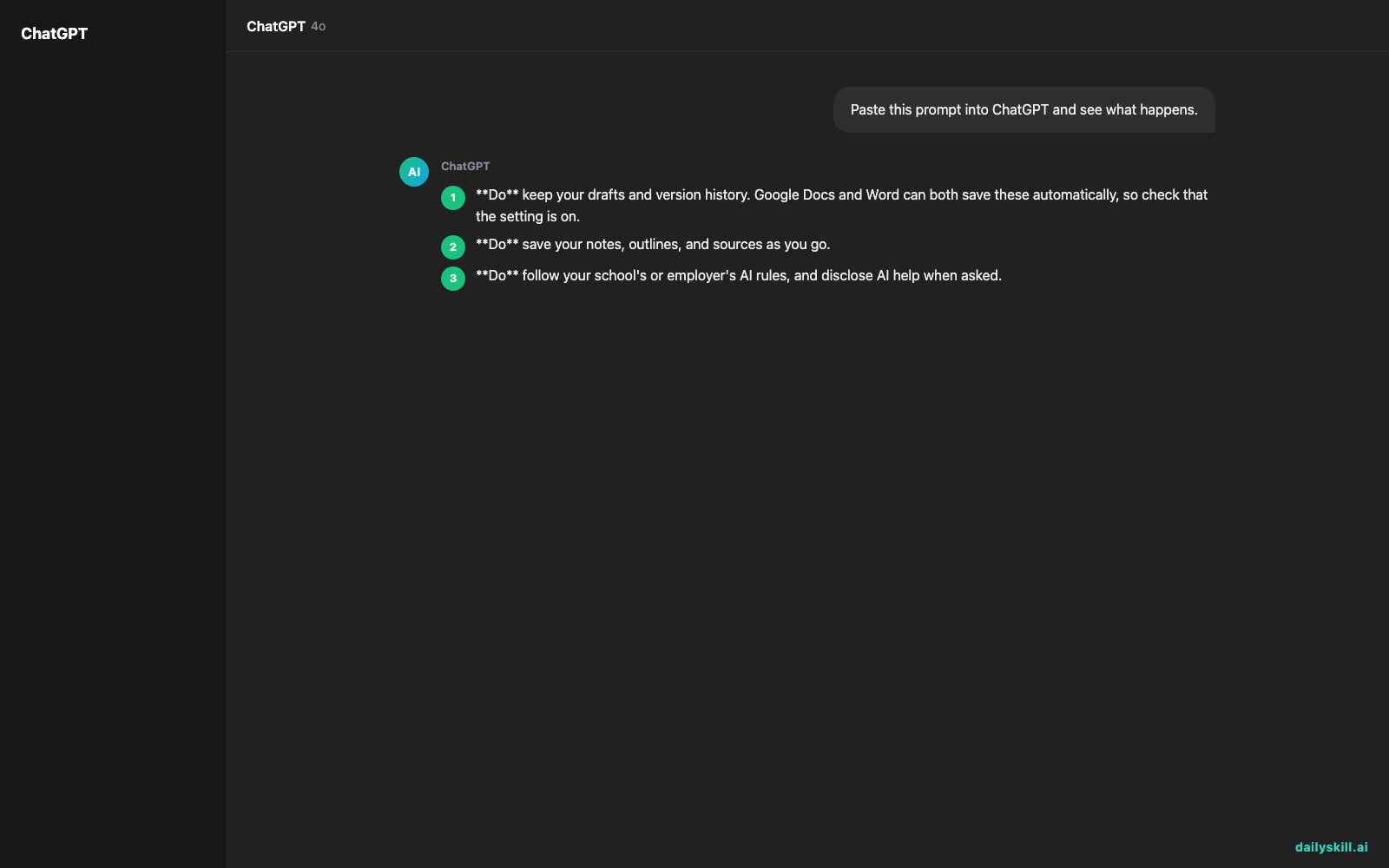
- Do keep your drafts and version history. Google Docs and Word can both save these automatically, so check that the setting is on.
- Do save your notes, outlines, and sources as you go.
- Do follow your school’s or employer’s AI rules, and disclose AI help when asked.
- Don’t panic if you get flagged. Calmly show your process and ask for a human review.
- Don’t pay for tools that promise to “beat” detectors. Results are inconsistent, and your time is better spent on your own voice.
If you’re a teacher or editor:
- Do treat a score as one input, never the only one.
- Do talk with the writer. Ask about their choices, their sources, and how they got to this draft.
- Don’t judge short samples or heavily edited text by score alone.
- Don’t assume a flag means dishonesty. Many flags are simply wrong.
FAQ
Do AI detectors work at all?
Sometimes, especially on long, unedited AI text. But accuracy varies by tool, text length, and writer, so no score should be treated as certain.
Can I check my own writing before submitting?
You can, but don’t over-trust the result. A clean score proves nothing, and neither does a flagged one. Your drafts and notes are much stronger protection.
What if I did use AI to help?
Follow the rules you’ve been given, and say so when asked. Using AI for brainstorming, feedback, or editing is treated very differently from handing in AI-written work as your own. Being open about it is the safest path.
Bottom line
AI detectors are a rough hint, not a judge, so rely on your process and a human conversation instead of a score.
What’s your take? Have you been flagged, or had to review someone’s work? Share your experience in the comments, because real stories help everyone here.
Tomorrow’s question: How do I create a personalized fitness and workout split with AI? We’ll show you how to build a plan that fits your goals, schedule, and equipment.
You might also like:
- Turn Messy Travel Notes into a Day-by-Day Itinerary
- Magic Eraser (Google Photos) — Erase Unwanted Objects From Any Photo in One Tap
Master Everyday AI in 1 Minute a Day
Get our free 2026 Double-Blind AI Benchmark Scorecard & 20 Ready-to-Use Prompts, plus one honest, 60-second AI skill in your inbox every morning. Zero hype, plain English, cancel anytime.