
You found a study that says exactly what you hoped. Before you quote it in an essay, a work report, or an argument with your brother-in-law, one doubt creeps in: did other researchers back this up, or tear it apart?
Scite.ai answers that. It shows whether later research supports or disputes a paper, so you can check a science or health claim without reading dozens of follow-up studies. It’s for students, writers, and curious readers.
What it is
Scite.ai is a research tool that reads how papers cite each other. A normal citation count only tells you how often a paper was mentioned. Scite looks at the sentence around each mention and sorts it into three groups: supporting, mentioning, or contrasting (disputing).
Scite calls these “Smart Citations.” Think of it as reading the reviews of a paper instead of just counting the stars.
Try it in 5 minutes
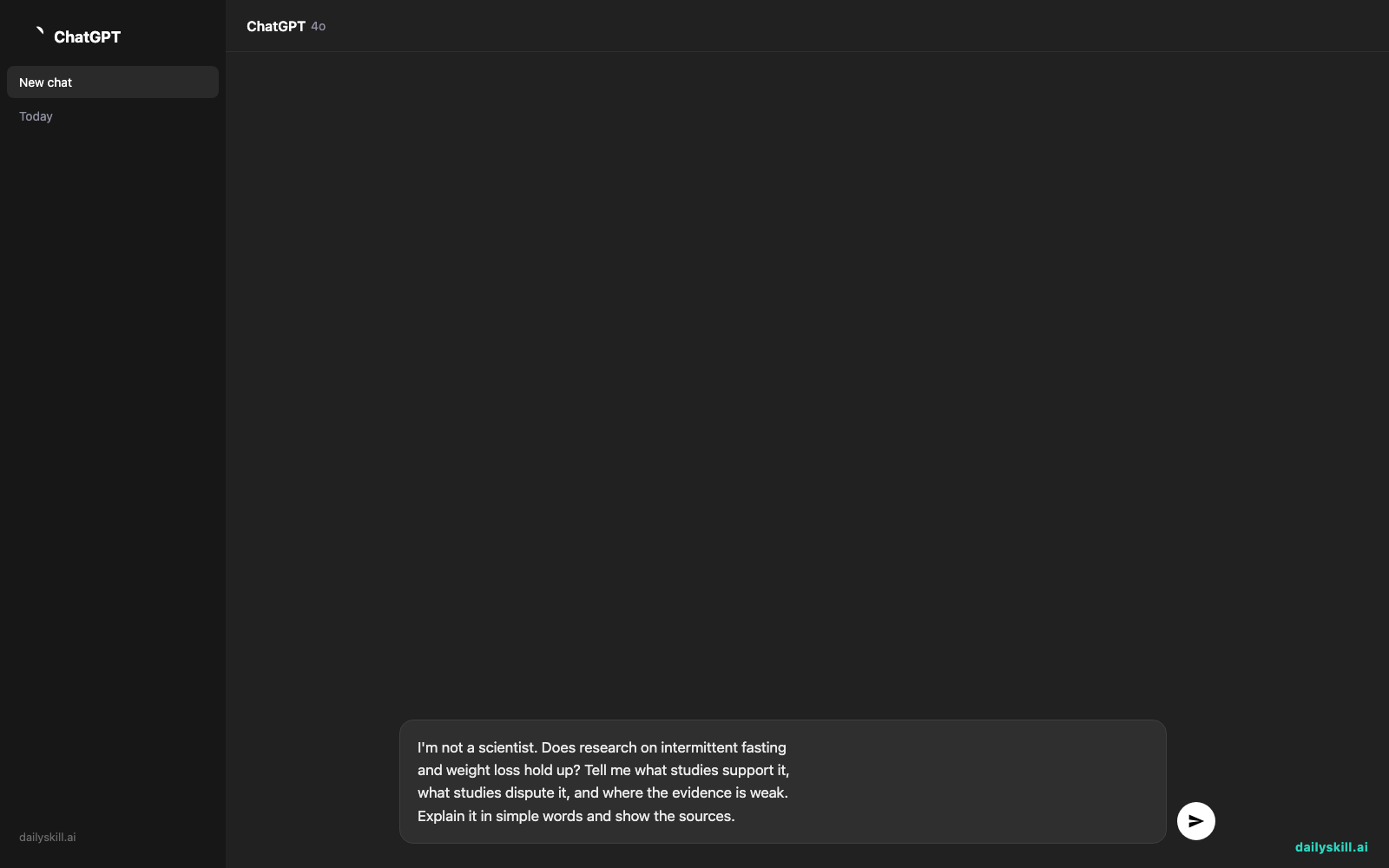
- Go to scite.ai and sign up for the free trial or a basic account. What’s included can change, so check the pricing page first.
- Use the search bar to look up a paper by title, topic, or DOI (the unique ID that most papers have, often printed near the title).
- Open the paper’s page and find the citation summary. You’ll see counts for supporting, mentioning, and contrasting citations.
- Click the contrasting number and read the actual sentences from other papers that push back.
- If your plan includes Scite’s AI assistant, paste the prompt below to get a plain-English summary with sources.
I'm not a scientist. Does research on intermittent fasting
and weight loss hold up? Tell me what studies support it,
what studies dispute it, and where the evidence is weak.
Explain it in simple words and show the sources.
Tip: click through to the sources it lists. Check that each one says what the summary claims.
A real example
Say you see a headline claiming a certain supplement boosts memory. You search for the study on Scite and open its page.
Here is the kind of result you might see:
Citation summary: Dozens of later papers mention the study in passing. A handful support its finding. Two contrast it. One snippet reads: “We were unable to reproduce the memory improvement reported earlier when using a larger sample.”
What that tells you: The claim isn’t dead, but it’s shaky. The original study was small, and a larger one didn’t match it. Look for newer, bigger studies before you trust it.
Your numbers and wording will differ for every paper. The value is seeing the pushback in other researchers’ own words, a few clicks from the headline.
Honest take
Best for:
– Students checking whether a source is safe to cite
– Writers, journalists, and curious readers fact-checking a health or science claim
– Anyone who wants a quick credibility check before sharing a study
Not for:
– Everyday news, products, or general questions. It focuses on academic papers.
– A final verdict. Disputing citations are rare even for weak studies, so a clean record doesn’t prove a paper is right. Brand-new papers also have few citations, so they can look thin or untested.
Scite’s own sorting can also misread a sentence now and then. Read the snippets before you trust the labels.
The free trial and basic features are enough to test a handful of papers. Regular use usually needs a paid plan.
FAQ
Is Scite.ai free?
There’s a free trial and some basic features. Fuller access typically requires a subscription, so check the current plans before you rely on it.
Is it safe to use?
You’re mostly searching public research, so little personal data is involved. Don’t upload private or confidential documents to any online tool unless you’ve read its privacy policy.
Do I need an account?
You’ll likely need one to use the trial and save your searches. Signing up takes about a minute.
Today’s pick wrap-up
Verdict: If you’ve ever wondered whether a study holds up, Scite.ai is a fast way to see who backs it and who doesn’t.
Join in: Try it on a study you saw in the news this week. Then tell us in the comments what you found, and whether it surprised you.
Tomorrow: We’ll look at Gamma, a tool that turns your ideas into a presentation, so you can build slides without staring at a blank page.
You might also like:
- Keyboard Shortcut Cheat Sheet for Your Work Apps — with AI
- How do I use AI to speed up product research before making an expensive purchase?
Master Everyday AI in 1 Minute a Day
Get our free 2026 Double-Blind AI Benchmark Scorecard & 20 Ready-to-Use Prompts, plus one honest, 60-second AI skill in your inbox every morning. Zero hype, plain English, cancel anytime.