You’re standing in the cereal aisle holding two boxes, and the label says “17g of sugar per serving.” Is that a lot? A little? Should you put it back?
Here’s the fix: snap a photo of any nutrition label, ask ChatGPT one prompt, and get a plain-English answer — including a 1-10 score for your specific goal — in under a minute.
Sound familiar?
You flip a box over, see a wall of numbers — sodium, saturated fat, added sugars, percent daily value — and none of it means anything without a nutrition degree. So you just buy it anyway and hope for the best.
The 60-second fix
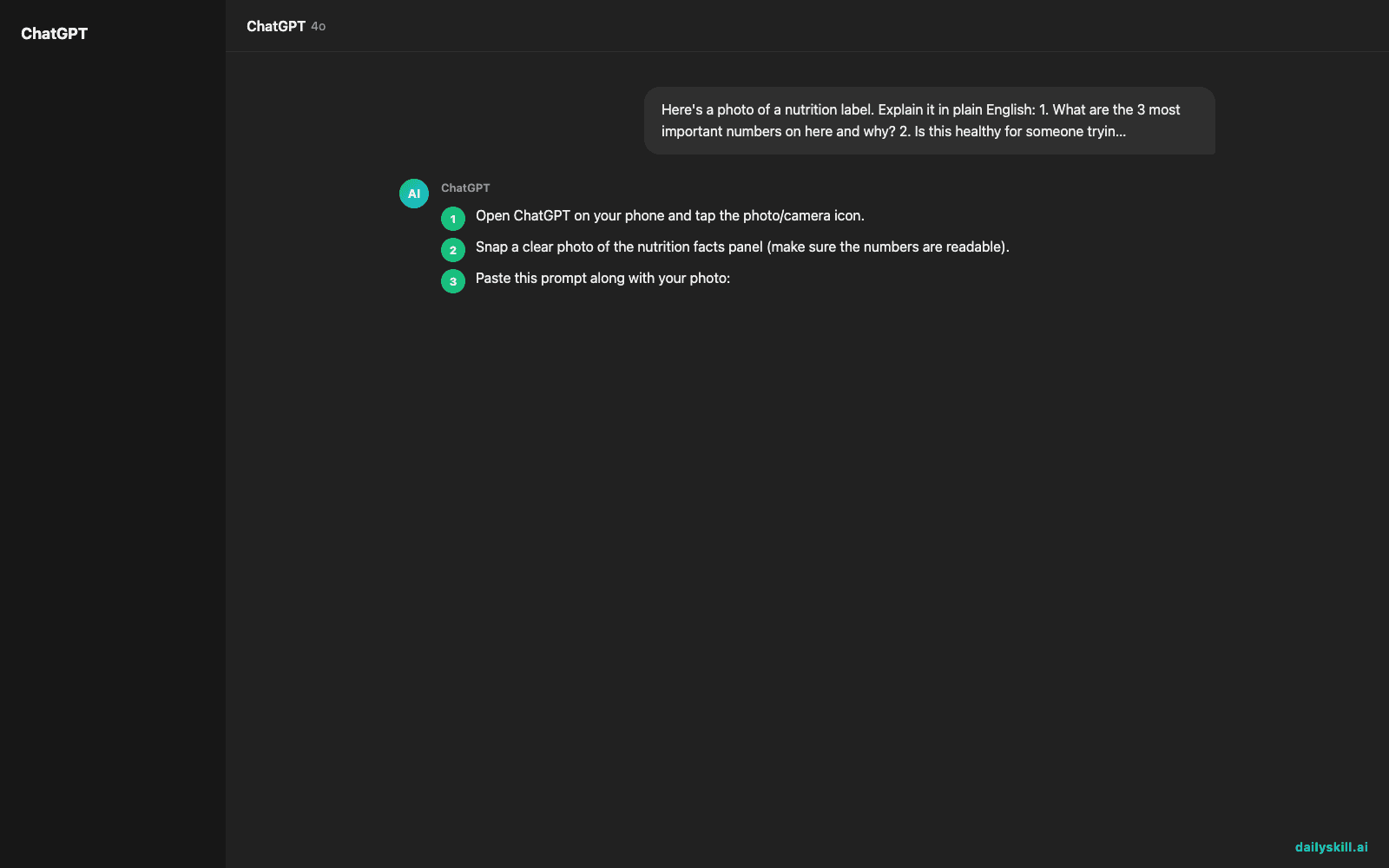
- Open ChatGPT on your phone and tap the photo/camera icon.
- Snap a clear photo of the nutrition facts panel (make sure the numbers are readable).
- Paste this prompt along with your photo:
Here's a photo of a nutrition label. Explain it in plain English:
1. What are the 3 most important numbers on here and why?
2. Is this healthy for someone trying to [eat less sugar / lose weight / build muscle / eat heart-healthy — pick one]?
3. Rate it 1-10 for that goal and explain what would make it better.
Keep it simple, no jargon.
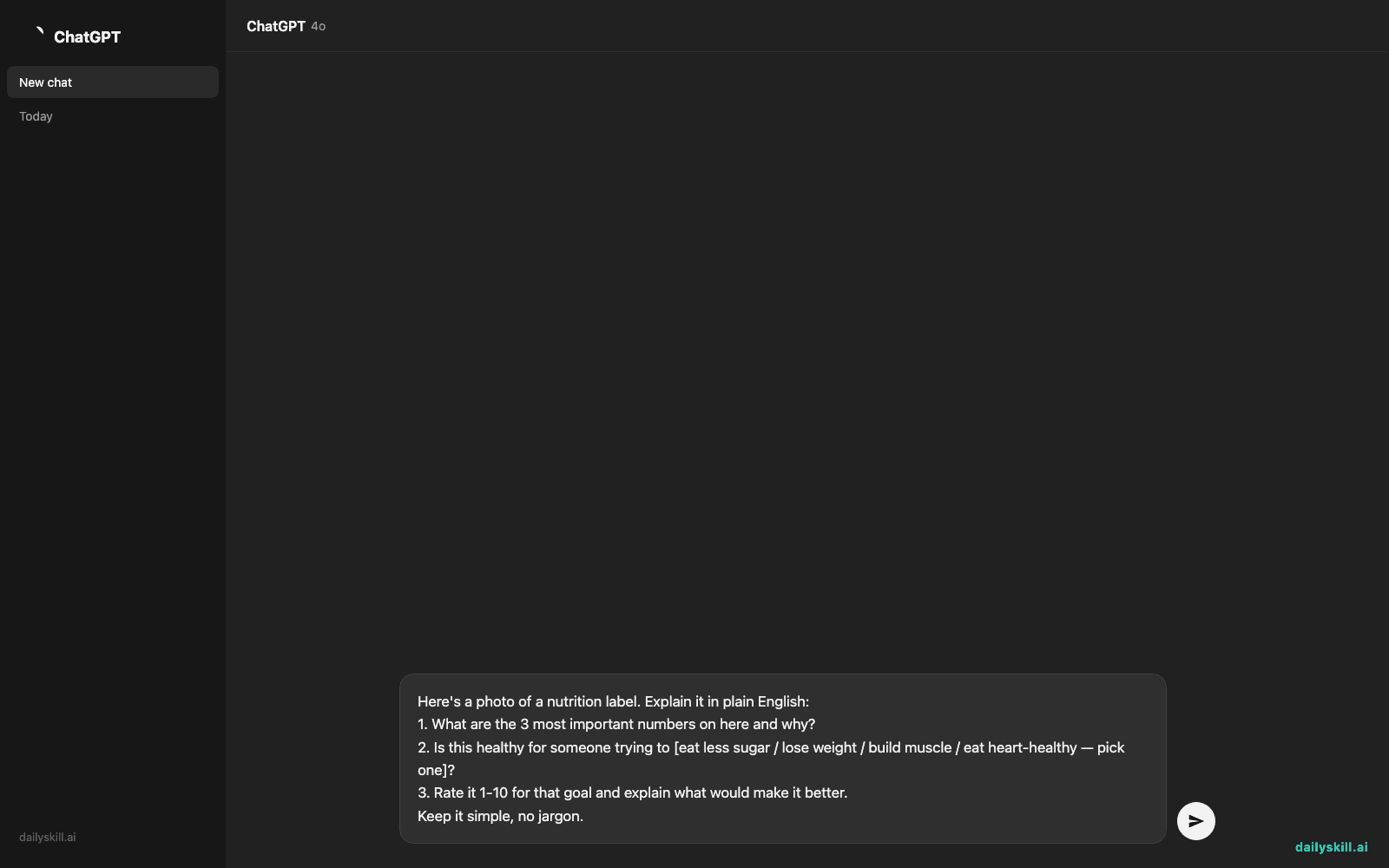
Swap the bracketed goal for whatever you actually care about. That’s what turns a generic answer into one that’s useful to you.
Real example
Input: Photo of an oats-and-honey granola bar label — 190 calories, 8g sugar, 3g fiber, 140mg sodium per bar. Goal: “lose weight.”
AI output: “The 3 numbers that matter most: calories (190 is snack-sized, that’s fine), sugar (8g is about 2 teaspoons — moderate), and fiber (3g is decent, it’ll help you feel full). For weight loss, this is a 7/10 — the fiber helps curb hunger, but the sugar is closer to what you’d want in a treat than a daily staple. It’d score higher with sugar under 5g and fiber closer to 5g.”
That’s the kind of answer a nutritionist friend would give you over coffee — not a dictionary definition.
Level up
- Ask “Compare this to [other product]” if you’re choosing between two items in the store.
- Say “I have diabetes / high blood pressure / a nut allergy” so the AI flags what actually matters to you.
- Ask it to suggest one swap: “What’s a better version of this I could find in the same aisle?”
FAQ
Can ChatGPT actually read a photo of a nutrition label?
Yes — attach the photo like you would any image and describe what you want. It reads the text directly off the label.
Is this a substitute for a doctor or dietitian?
No. Treat it as a quick, plain-English translator for everyday shopping decisions, not medical advice for serious health conditions.
What if the label is blurry or at an angle?
Retake it straight-on with good lighting. If a number still looks off, ask “does this number seem right?” and the AI will flag anything unclear.
Today’s check-in
Try it on one item in your kitchen right now and reply with your AI’s health rating — we want to see what you’re eating. Tomorrow: build a simple before/after checklist to actually track your progress over time.
You might also like:
- Can AI create a learning plan to help me pick up a new skill?
- Notion AI — Stop Rewriting Your Notes, Let AI Clean Them Up
Master Everyday AI in 1 Minute a Day
Get our free 2026 Double-Blind AI Benchmark Scorecard & 20 Ready-to-Use Prompts, plus one honest, 60-second AI skill in your inbox every morning. Zero hype, plain English, cancel anytime.