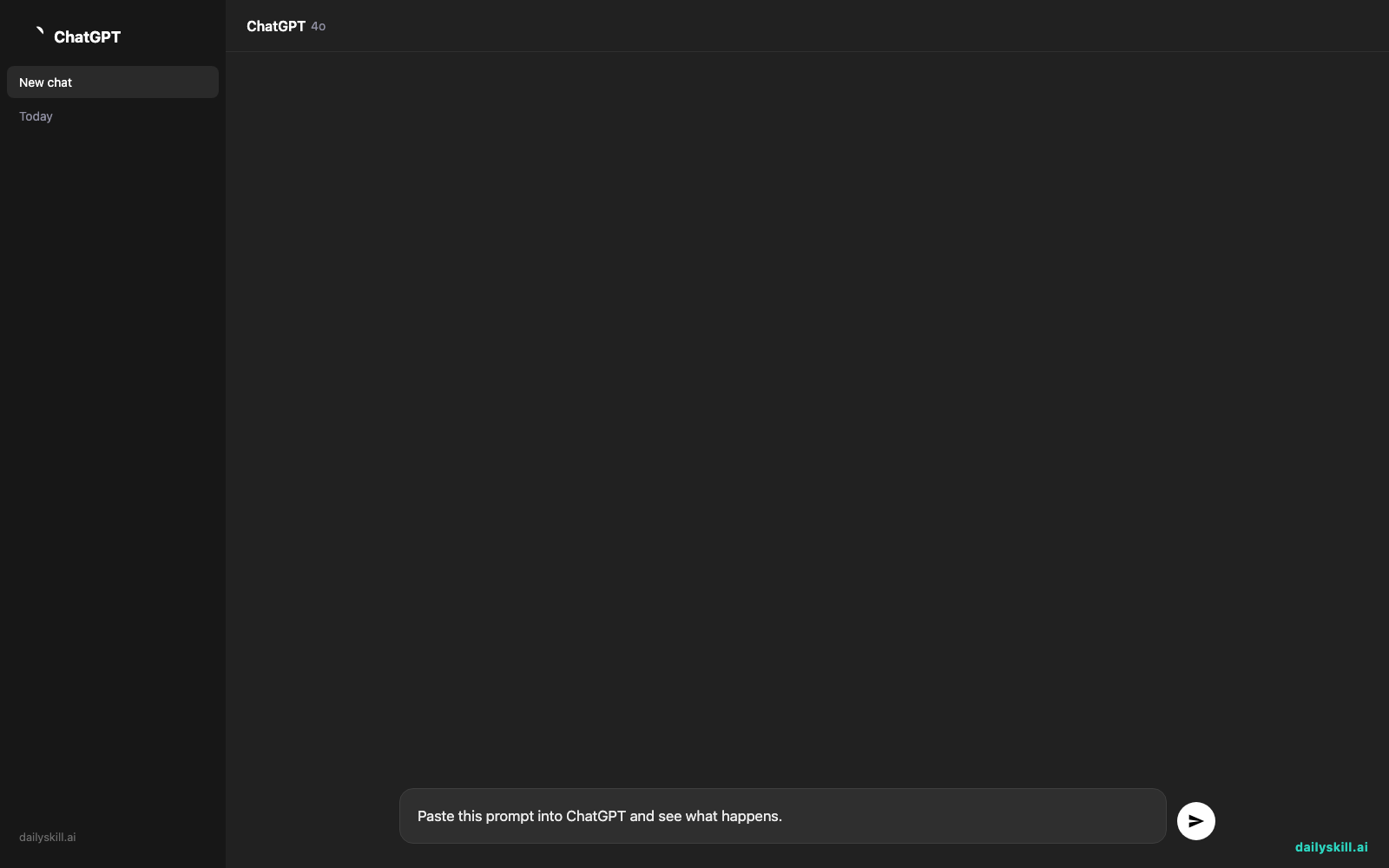
Yes, you can use AI to practice conversations, and it’s one of the most useful, underrated things it does. Just tell it plainly: “Roleplay as [person/situation] and respond in character. I’ll go first.”
Then treat it like a rehearsal partner — pause, redo lines, ask for feedback. It works well for mock interviews, tough talks with a boss or family member, and customer service scripts, because the AI reacts in real time and lets you try the conversation more than once — something you can’t do with a real person.
Why this comes up
People feel silly asking a chatbot to “pretend.” It feels less legitimate than practicing with a friend, so they skip it — even though rehearsal is exactly what helps with nerves.
Others worry the AI will just be agreeable and not give a realistic reaction, so what’s the point of practicing against a pushover?
Practicing a hard conversation with AI first doesn’t make it fake. It makes the real one less scary.
The honest answer
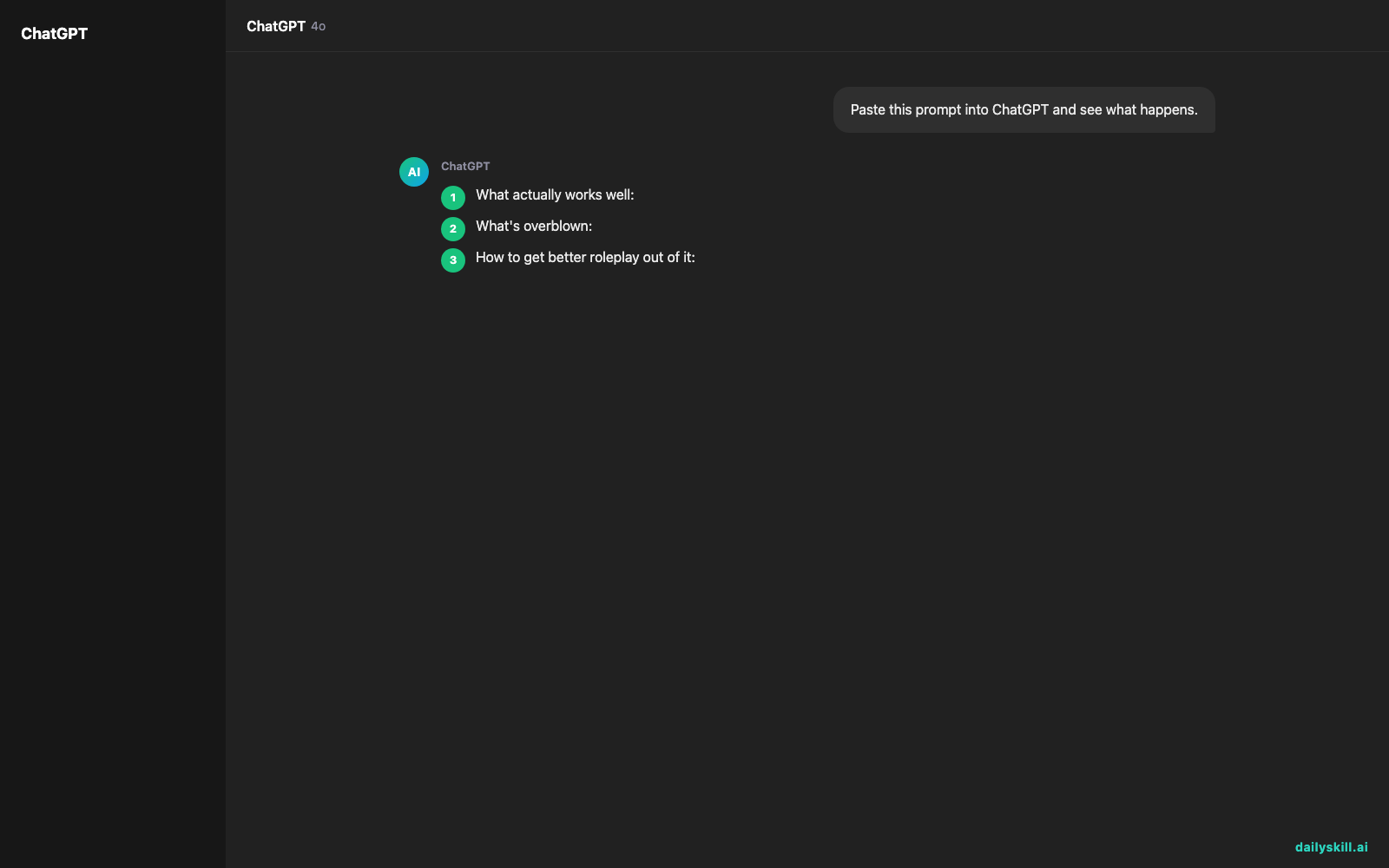
What actually works well:
– Mock interviews. Give the AI the job title, company, and job description, and ask it to interview you like a hiring manager, one question at a time, with feedback after. This is genuinely one of the best free ways to prep for interviews right now.
– Hard personal conversations. Asking for a raise, setting a boundary with a relative, ending a friendship — simulate the scenario and try different tones (“say it more gently,” “make them more defensive”) to prepare for real reactions.
– Customer service scripts. Role-reverse it: ask the AI to be the difficult customer while you practice your response, or ask it to play the support rep so you can test what to say.
What’s overblown:
– AI won’t perfectly predict a real person’s reaction. Your actual boss or interviewer will surprise you sometimes — that’s normal.
– It can be too agreeable by default. If it’s not pushing back enough, say so directly: “Be more difficult. Interrupt me. Don’t let me off easy.”
– It’s not a substitute for real practice with humans when the stakes are high. Think of it as your warm-up round, not your only rehearsal.
How to get better roleplay out of it:
– Set the scene clearly: who they are, their mood, what they want.
– Ask it to stay in character until you say “stop” or “debrief.”
– Ask for a wrap-up critique afterward — this is often the most valuable part.
What to do
- Do give context upfront: role, tone, goal, and how tough you want it to be.
- Do ask for feedback after the roleplay, not just during it.
- Do run the same scenario twice with different approaches to compare outcomes.
- Don’t assume its reactions are exactly what a real person will do — use it to build confidence, not certainty.
- Don’t skip the debrief — “how did I do, and what would you change?” is where the real learning happens.
- Don’t use roleplay as a way to avoid the real conversation forever — it’s practice, not a replacement.
FAQ
Can I use this to practice conversations in another language?
Yes — ask it to roleplay in that language and correct your grammar or phrasing as you go. It’s a solid way to build confidence before speaking with real people.
Is a mock interview with AI actually useful, or just generic questions?
It’s useful if you feed it real details — the job posting, your resume, the company name. Generic prompts get generic questions; specific input gets a much sharper practice session.
What if the AI breaks character?
Just remind it: “Stay in character as [role].” It usually snaps back quickly.
Bottom line
AI makes a surprisingly good practice partner for the conversations you’re dreading — use it to rehearse, then go have the real one with more confidence. Have you tried roleplaying a tough conversation with AI? Tell us how it went. Tomorrow: what should you never ask an AI tool?